Keyboard Shortcuts?f

×
  • Next step
  • Previous step
  • Skip this slide
  • Previous slide
  • mShow slide thumbnails
  • tShow transcript (+SHIFT = all transcript)
  • nShow notes (+SHIFT = all notes)

Please be cautious in using the transcripts.

They were created mechanically and have mostly not been checked or revised.

Here is how they were created:

  1. live lecture recorded;
  2. machine transcription of live recording;
  3. ask LLM to clean up transcript, and link to individual slides.

This is an error-prone process.

Click here and press the right key for the next slide.

(This may not work on mobile or ipad. You can try using chrome or firefox, but even that may fail. Sorry.)

also ...

Press the left key to go backwards (or swipe right)

Press n to toggle whether notes are shown (or add '?notes' to the url before the #)

Press m or double tap to slide thumbnails (menu)

Press ? at any time to show the keyboard shortcuts


Against Reflective Equilibrium?

insert-transcript#accdf86f-11f9-4337-902f-b8c98e086eca-here

Could scientific discoveries undermine, or support,
ethical principles?

Phase 2

Identify general arguments against the use of intuitions in doing ethics.

Consider implications for Rawl’s method of
reflective equilibrium.

Phase 1

Find places where a particular philosopher’s ethical argument relies on an empirical claim, and where knowledge of this claim depends on scientific discoveries.

What is reflective equilibrium?
insert-transcript#bfcc9839-4e38-4747-b7af-ef94fdccf0cd-here
Background: How do philosophers approach ethics? Rawls’ idea about reflective equilibrium captures a dominant strategy.
One standard in ethics: Rawls’ reflective equilibrium idea
‘one may think of moral theory at first [...] as the attempt to describe our moral capacity [...] what is required is a formulation of a set of principles which, when conjoined to our beliefs and knowledge of the circumstances, would lead us to make these judgments with their supporting reasons were we to apply these principles conscientiously and intelligently’ (Rawls, 1999, p. 41); see Singer (1974) for critical discussion.

‘one may think of physicalmoral theory at first [...]
as the attempt to describe our moralperceptual capacity

Interesting: seems like Rawls’ project requires the methods of psychology (and is moral psychology)

[...]

what is required is

a formulation of a set of principles which,

when conjoined to our beliefs and knowledge of the circumstances,

would lead us to make these judgments with their supporting reasons

were we to apply these principles’

(Rawls, 1999, p. 41)

The idea of moral theory as an attempt to describe our moral capacity is great. It looks like this will involve moral psychology. But actually Rawls has no such ambitions. He thinks that you can describe moral capacities by characterising the judgements people are inclined to make.
So my main point for now is just that one quite influential way of doing ethics leaves no room for discoveries about moral psychology.
[UPDATE: save this for lecture 09: MFT MEETS REFLECTIVE EQUILIBRIUM; can give a bit more detail] But actually you can already see the outlines of an objection to reflective equilibrium:
Given multiple moral foundations, or multiple processes, we would not necessarily expect a single consistent set of principles. Neither within an individual; nor between individuals from different cultures.

Background: How do philosophers do ethics?

There are many approaches, but let’s look at one influential candidate.
insert-transcript#294956f4-2713-40c5-8205-4802223e6011-here
This is the encyclopedia

‘Reflective equilibrium is the dominant method in moral and political philosophy’

(Knight, 2023)

‘this method, properly understood, is [...] the best way of making up one’s mind about moral matters [...]. Indeed, it is the only defensible method: apparent alternatives to it are illusory.’

(Scanlon, 2002, p. 149)

insert-transcript#024112e7-af9f-4ae7-8903-882c8f7e332d-here

‘To most moral philosophers who reason about substantive moral issues,it seems that the method of reflective equilibrium, or a process very similar to it, is the best or most fruitful method of moral inquiry.

Of the known methods of inquiry, it is the one that seems most likely to lead to justified moral beliefs.

(McMahan, 2013, p. 111)

insert-transcript#834ff849-182d-4d49-82a5-5eda44f1022d-here
One standard in ethics: Rawls’ reflective equilibrium idea
‘one may think of moral theory at first [...] as the attempt to describe our moral capacity [...] what is required is a formulation of a set of principles which, when conjoined to our beliefs and knowledge of the circumstances, would lead us to make these judgments with their supporting reasons were we to apply these principles conscientiously and intelligently’ (Rawls, 1999, p. 41); see Singer (1974) for critical discussion.

‘one may think of moral physical theory at first [...]
as the attempt to describe our moral perceptual capacity

Interesting: seems like Rawls’ project requires the methods of psychology (and is moral psychology)

[...]

what is required is

a formulation of a set of principles which,

when conjoined to our beliefs and knowledge of the circumstances,

would lead us to make these judgments with their supporting reasons

were we to apply these principles’

Rawls (1999, p. 41)

(a) do you understand reflective equilibrium?
(b) Can you see an argumemt against it?
Would the same method be a way to produce a physical theory?
insert-transcript#5803ec6b-2433-4793-bb54-345cc8b84366-here

Could scientific discoveries undermine, or support,
ethical principles?

Phase 2

Identify general arguments against the use of intuitions in doing ethics.

Consider implications for Rawl’s method of
reflective equilibrium.

Phase 1

Find places where a particular philosopher’s ethical argument relies on an empirical claim, and where knowledge of this claim depends on scientific discoveries.

Now we know what reflective equilibrium is.
insert-transcript#3b77779c-e776-4b56-9a2b-a66b33707a3e-here

1. Ethical judgements are explained by a dual-process theory, which distinguishes faster from slower processes.

2. Faster processes are unreliable in unfamiliar* situations.

3. Therefore, we should not rely on faster process in unfamiliar* situations.

4. When philosophers rely on not-justified-inferentially premises, they are relying on faster processes.

5. The moral scenarios and principles philosophers consider involve unfamiliar* situations.

6. Therefore, not-justified-inferentially premises about particular moral scenarios, and debatable principles, cannot be used in ethical arguments where the aim is knowledge.

insert-transcript#cac0fcbf-bccd-4ec5-b116-bb5c96390abb-here

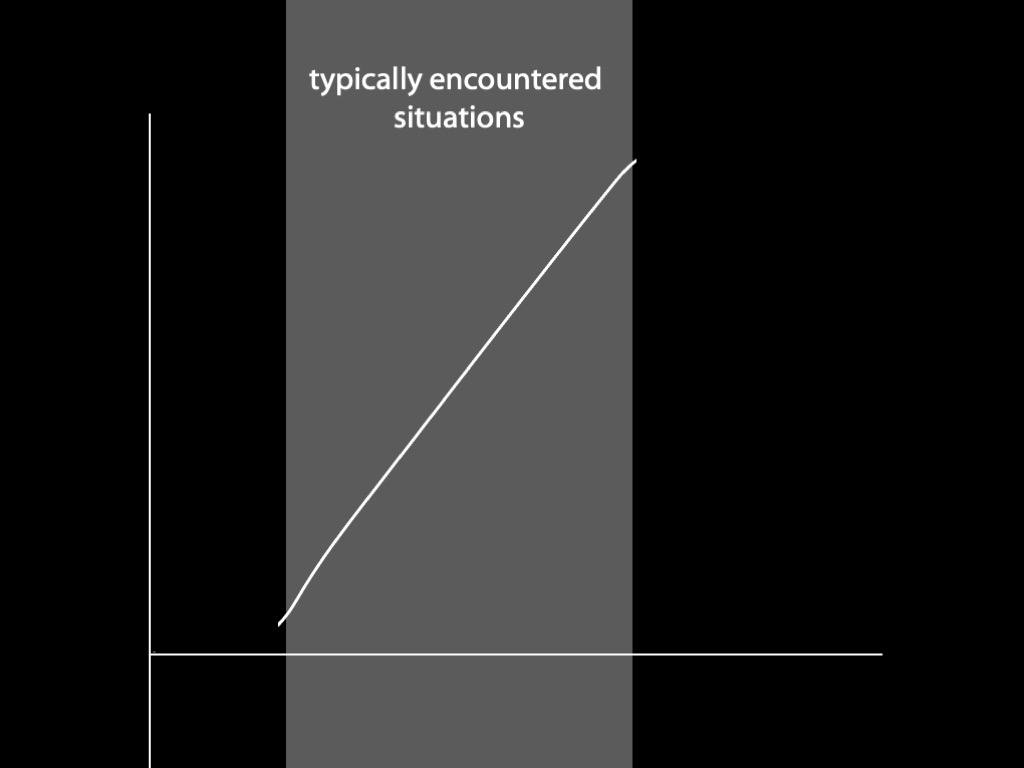
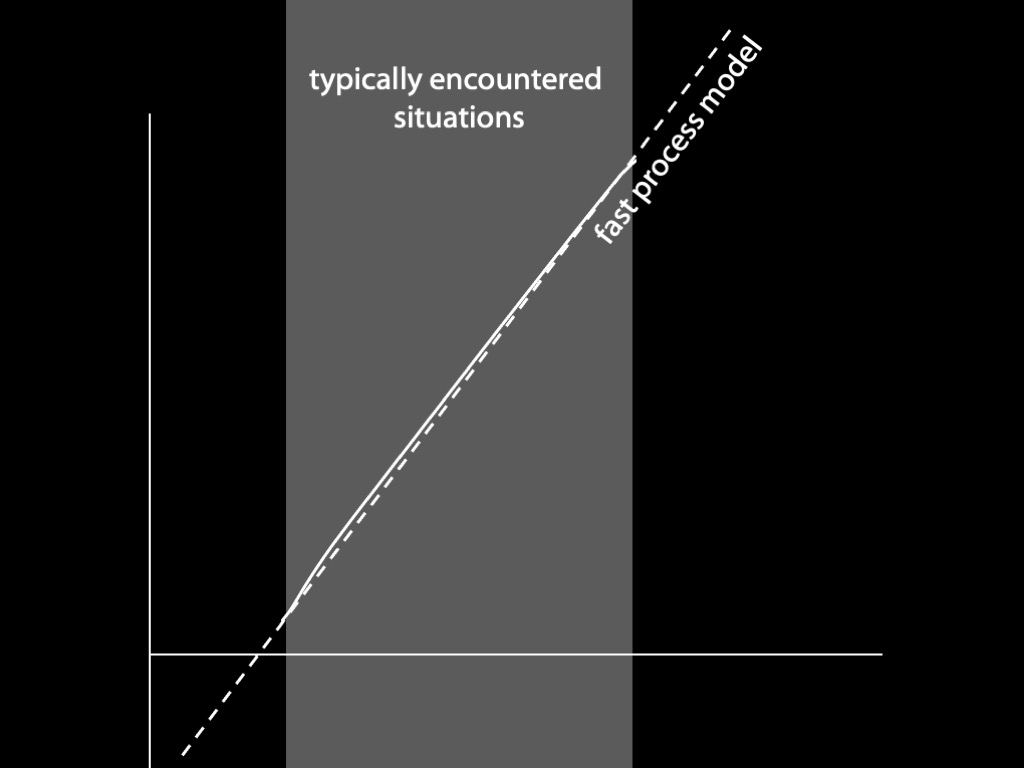
recall: speed vs accuracy trade-offs
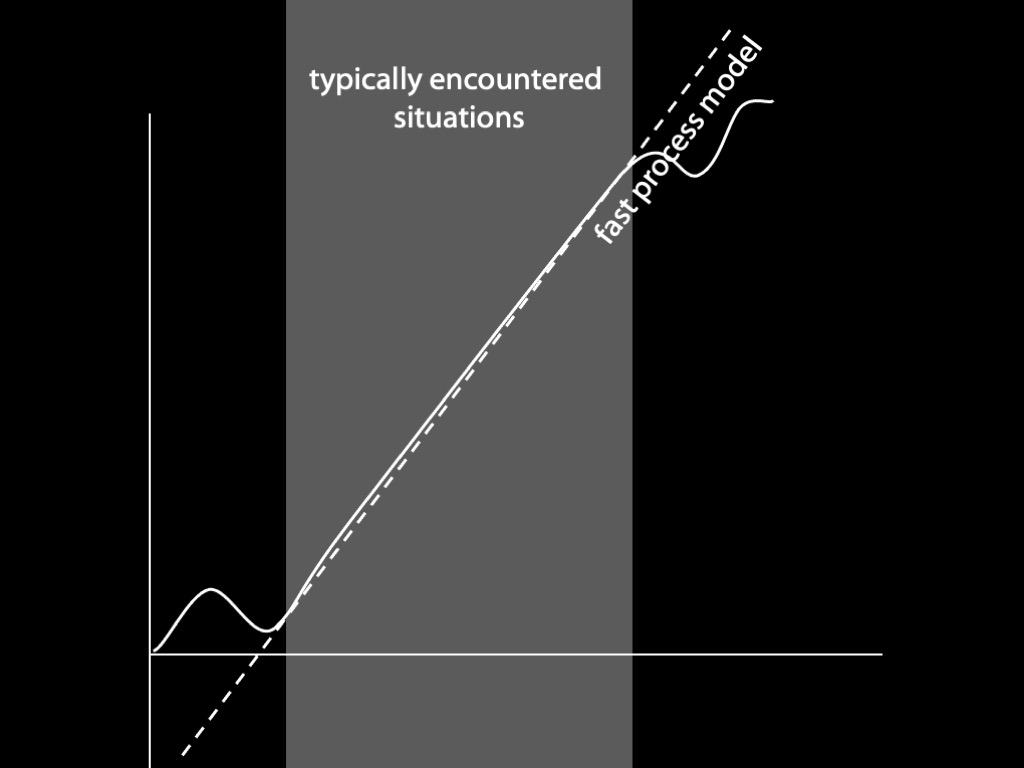
Any broadly inferential process has to make a trade-off between speed and accuracy
insert-transcript#f1a60e4f-c99f-4c05-a7e1-02093bef8b42-here
insert-transcript#7f77f40c-de3f-4531-8e17-61d87c8f989e-here
insert-transcript#9186df2b-c340-4b32-9629-2c65a307b151-here
insert-transcript#c69cb2c6-a802-4966-8452-2a735c515600-here

Dilemma for Rawls’ Reflective Equilibrium (narrow only)

Horn 1 : If you include not-justified-inferentially judgements about, or with implications for, unfamiliar* situations, you are not justified in starting there.

NB: 'not justified in starting there' is a jump; what we really established is that the method predictably risks error. There’s a further issue about justification. [I’ve left the slide like this because it’s clearer if we make the jump. But we wouldn’t do that in an essay.]
Key phrase: fast processes **predictably risk error** in unfamilar situations

Horn 2 : If you include only not-justified-inferentially judgements about familiar* situations, you are not justified in generalising from them.

Because speed-accuracy trade off ...
amount to a generalisation of principles implicit in how fast processes handle familiar situations which allows us to apply those same principles in unfamiliar situations.
Reflective equilibrium might be interesting for all kinds of reasons (just as impetus mechanics is). But it is not a reliable method of discovering ethical truths for the kinds of problems we humans face today.
insert-transcript#a17ba21e-d0ae-4882-9fb1-ffc5e7139ee8-here
The claim we are making is much to big to be supported by such a quick argument. That will not do at all!


Not-justified-inferentially premises about particular moral scenarios, and debateble principles, cannot be used in ethical arguments where the aim is knowledge.

Reflective equilibrium ‘is [...] the best way of making up one’s mind about moral matters [...]. Indeed, it is the only defensible method: apparent alternatives to it are illusory.’

(Scanlon, 2002, p. 149)

If you think you have a quick refutation of a widely held view, always ask what you missed.

what did I miss?

insert-transcript#9129b652-a95d-4755-9f20-f7cc399cd492-here

reply to dilemma

narrow vs wide reflective equilibrium

‘equilibrium after we have “had an opportunity to consider other plausible conceptions and assess their supporting grounds. Taking this process to the limit, one seeks the conception, or plurality of conceptions, that would survive the rational consideration of all feasible conceptions and all reasonable arguments for them” (CP, p. 289)’

In narrow reflective equilibrium, the aim is to fit principles to your own considered judgements:
‘a narrow reflective equilibrium is reached where principles are matched to initial judgments, allowing only for the “smoothing out of certain irregularities” (Rawls 1971: 49)’ (Knight, 2023)
Wide reflective equilibrium is ‘equilibrium after we have “had an opportunity to consider other plausible conceptions and assess their supporting grounds. Taking this process to the limit, one seeks the conception, or plurality of conceptions, that would survive the rational consideration of all feasible conceptions and all reasonable arguments for them” (CP, p. 289)’ Scanlon (2002, p. 150).

Scanlon (2002, p. 150)

insert-transcript#ba797e79-ec13-430e-8b18-65da9a77ff04-here

1. Ethical judgements are explained by a dual-process theory, which distinguishes faster from slower processes.

2. Faster processes are unreliable in unfamiliar* situations.

3. Therefore, we should not rely on faster process in unfamiliar* situations.

4. When philosophers rely on not-justified-inferentially premises, they are relying on faster processes.

5. The moral scenarios and principles philosophers consider involve unfamiliar* situations.

6. Therefore, not-justified-inferentially premises about particular moral scenarios, and debatable principles, cannot be used in ethical arguments where the aim is knowledge.

insert-transcript#2b59040a-5ad4-4c3e-b9cf-87d67ceeb0db-here

1. Ethical judgements are explained by a dual-process theory, which distinguishes faster from slower processes.

2. Faster processes are unreliable in unfamiliar* situations.

3. Therefore, we should not rely on faster process in unfamiliar* situations.

4. When philosophers rely on not-justified-inferentially premises, they are relying on faster processes.

5. The moral scenarios and principles philosophers consider involve unfamiliar* situations.

6. Therefore, not-justified-inferentially premises about particular moral scenarios, and debatable principles, cannot be used in ethical arguments where the aim is knowledge.

but where does this leave reflective equilibrium?
insert-transcript#9d3a3451-2529-4ab7-9a94-f01f2357b924-here

Dilemma No 2 for Rawls’ Reflective Equilibrium (wide)

Horn 1: If the principles and theories considered are ultimately grounded in faster processes, a version of the first dilemma arises.

Horn 2: If the principles and theories considered are not grounded in faster processes, reflective equilibrium ‘seems to become empty as a methodological doctrine’ (Scanlon, 2002, p. 151).

NOTE THAT Scanlon thinks it is not empty. (He is offering this as an opponent’s view)
I don’t think this Scanlon’s counter is quite right. It’s not that reflective equilibrium becomes empty, but that it becomes something indistinguishable from whatever methods are used by physicisist or geneticists or historians or whoever. Whereas I thought the point of reflective equilibrium was to be a method for doing ethics and political science specifically; and that its introduction was motivated by the thought that we cannot approach them in the way we do physics or genetics.
Scanlon defends wide reflective equilibrium against the charge of vacuuousness. But I’m not persuaded.
Scanlon’s defence: ‘What the method of reflective equilibrium prescribes is, so to speak, a level playing field of intuitive justification on which princi- ples and judgments of all levels of generality must compete for our allegiance. It thus allows all possible sources of justificatory force to be considered. But the method is not vacuous because it is incompat- ible with some views about these sources. It is incompatible, first, with the idea that any particular class of judgments or principles can be singled out in advance of this process as justified on some other basis and, second, with the idea that any class of considered judgments should be left out of this process (for example that “intu- itions” about what is just or unjust in particular cases should not be given any weight in justifying general principles but must be derived from them.)’ (Scanlon, 2002, p. 151).
insert-transcript#3d65357b-84c2-451e-b075-8a74e987e7c5-here
image source: bing ai (https://www.bing.com/images/create/someone-experiencing-philosophical-doubt-in-the-st/1-65e5b2a124f642c1b4fe68c6686e130f?id=08sBu7s95CjozOCZJ4FVig%3d%3d&view=detailv2&idpp=genimg&idpclose=1&thId=OIG1.QOxbHvVI2ce3CSYH_nao&FORM=SYDBIC)

But are you sure that ethical intuitions can be wrong?

insert-transcript#03f784c2-7d9e-4a54-b601-cbbb1075da7c-here

‘a theory of justice is [...] a theory [...] setting out the principles governing our moral powers

(Rawls, 1999, p. 44)

I’m always interested to know who we are. Am I included? Are you?
Let’s suppose Rawls means living humans. (Not the history of our species, but also not just Rawls and his readers.)
Then it looks like there’s a sense in ethical intuitions cannot be wrong. This can be clarified by thinking about a comparison he draws ...
THis comes immediately after the initial stateement of reflective equilibrium

‘A useful comparison here is with the problem of describing the sense of grammaticalness that we have for the sentences of our native language. [footnote: Chomsky]’

(Rawls, 1999, p. 41)

Maybe also worth noting that some passages about grammar have been removed from the second edition.
insert-transcript#8460d800-9ae2-4857-a7c4-f75f27e46b55-here

Which comparison?

Ethics vs Physics

Not-justified-inferentially premises about particular moral scenarios cannot be used in ethical arguments where the aim is knowledge.

Extension to not-justified-inferentially premises generally?

‘debilitating pain is, other things equal, a bad thing, to be avoided or alleviated’ (Railton, 2014, p. 814)

Ethics vs Linguistics

1. we also have fast processes which give rise to linguistic intuitions

Implies a form of infallibility.

Premises about judgements about particular moral scenarios need to be supported by carefully controlled experiments if they are to be used in ethical arguments where the aim is to establish knowledge of their conclusions.

What does infallibility mean? 2. there is no interesting sense in which the principles governing the fast processes behind linguistic intuitions can be wrong. (Because there is nothing for them to answer to.)
3. In case #2 is too quick, we can say that they can be better or worse in enabling more or less sophisticated forms of communication (limits on the language of those who have been linguistically deprived in their early years, Senghas on profoundly deaf children of hearing parents etc); and they can match or fail to match those of others around us.
insert-transcript#6bcc8d9a-70ac-4318-86e6-497849f4c9da-here
image source: bing ai (https://www.bing.com/images/create/someone-experiencing-philosophical-doubt-in-the-st/1-65e5b2a124f642c1b4fe68c6686e130f?id=08sBu7s95CjozOCZJ4FVig%3d%3d&view=detailv2&idpp=genimg&idpclose=1&thId=OIG1.QOxbHvVI2ce3CSYH_nao&FORM=SYDBIC)

Are you sure that ethical intuitions can be wrong?

And even if they can, does the loose reconstruction of Greene’s argument lead to a good objection to reflective equilibrium?