Keyboard Shortcuts?f

×
  • Next step
  • Previous step
  • Skip this slide
  • Previous slide
  • mShow slide thumbnails
  • tShow transcript (+SHIFT = all transcript)
  • nShow notes (+SHIFT = all notes)

Please be cautious in using the transcripts.

They were created mechanically and have mostly not been checked or revised.

Here is how they were created:

  1. live lecture recorded;
  2. machine transcription of live recording;
  3. ask LLM to clean up transcript, and link to individual slides.

This is an error-prone process.

Click here and press the right key for the next slide.

(This may not work on mobile or ipad. You can try using chrome or firefox, but even that may fail. Sorry.)

also ...

Press the left key to go backwards (or swipe right)

Press n to toggle whether notes are shown (or add '?notes' to the url before the #)

Press m or double tap to slide thumbnails (menu)

Press ? at any time to show the keyboard shortcuts


Preview: Ethics vs Physics

insert-transcript#7c915ef8-90d8-4179-b63e-00b5939dc9d0-here

Broadly perceptual processes
influence what seems obvious to you.

insert-transcript#963813ff-ed8d-4f70-b30f-04c908299437-here
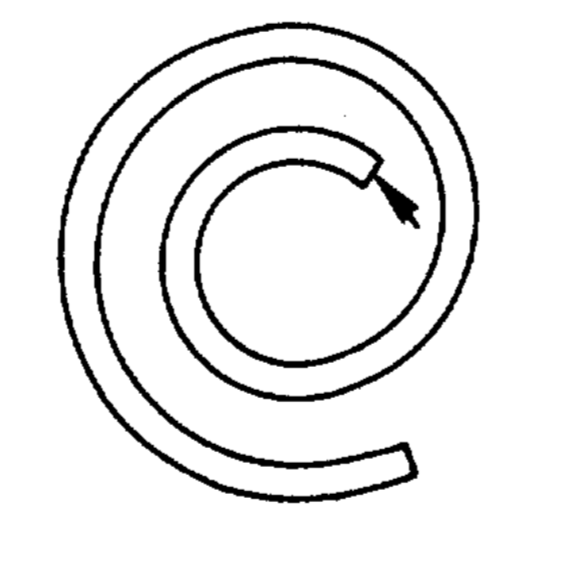
McCloskey et al. (1980, p. figure 2B)

insert-transcript#3371ce6a-c585-4007-b5d8-da4b54c6f534-here
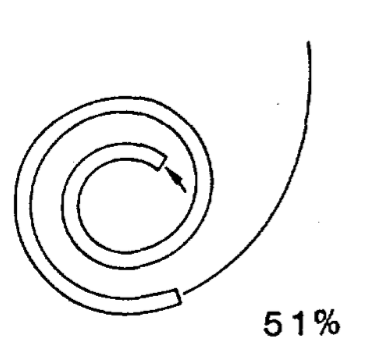
McCloskey et al. (1980, p. figure 2D)

insert-transcript#5c2457f4-2c8a-4bf9-9b19-e6047ac23af6-here
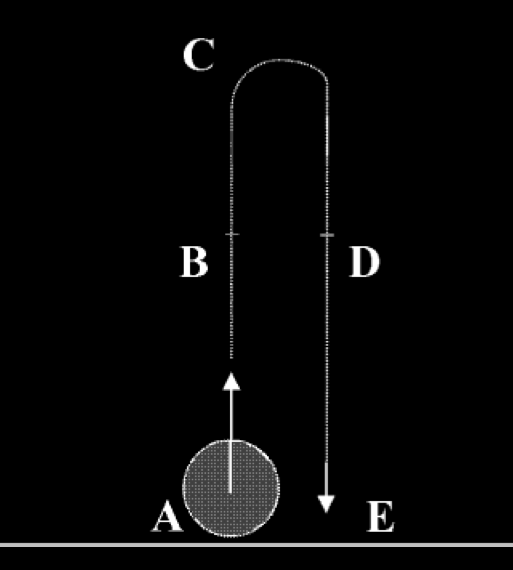
Kozhevnikov & Hegarty (2001, figure 1)

Fix shape and density. How would increasing the object’s size affect how quickly it decelerates when launched vertically? Impetus: larger size entails greater deceleration (so slower ascent). Newtonian: larger size entails lower deceleration (so faster ascent) if considering air resistance; otherwise size makes no difference.
insert-transcript#46fc3d1b-fa82-4db8-8630-c011dd322b97-here

simplified from Kozhevnikov & Hegarty (2001)
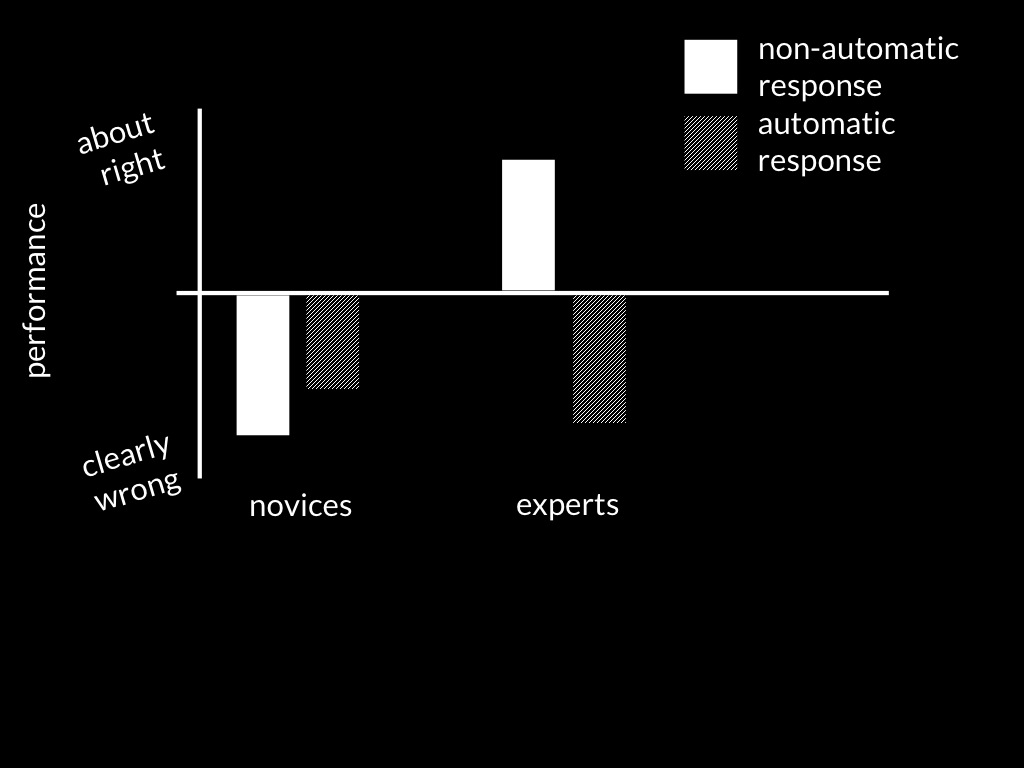
insert-transcript#ae67e196-9656-482d-802b-a0f09043c96a-here

simplified from Kozhevnikov & Hegarty (2001)

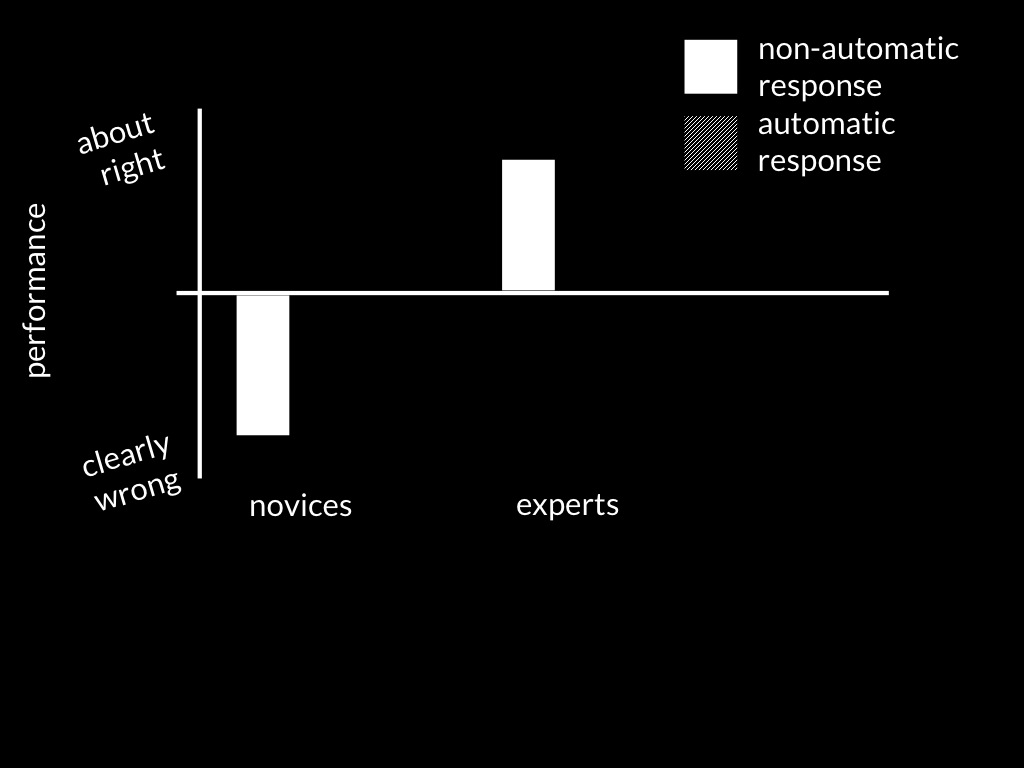
But even more convincingly, the prediction generated by Kozhevnikov and Heggarty’s conjecture about the computational description of the system underpinning representational momentum has been directly confirmed.
So while not decisive, I take this to be strong evidence for a \textbf{vertical distinction} between two systems for physical cognition.
insert-transcript#bee39f45-06a9-4a6e-b45c-c5aa6271ecea-here

speed vs accuracy

Since this is an important point for me, let me repeat: any broadly inferrential process must make a trade-off between speed and accuracy.

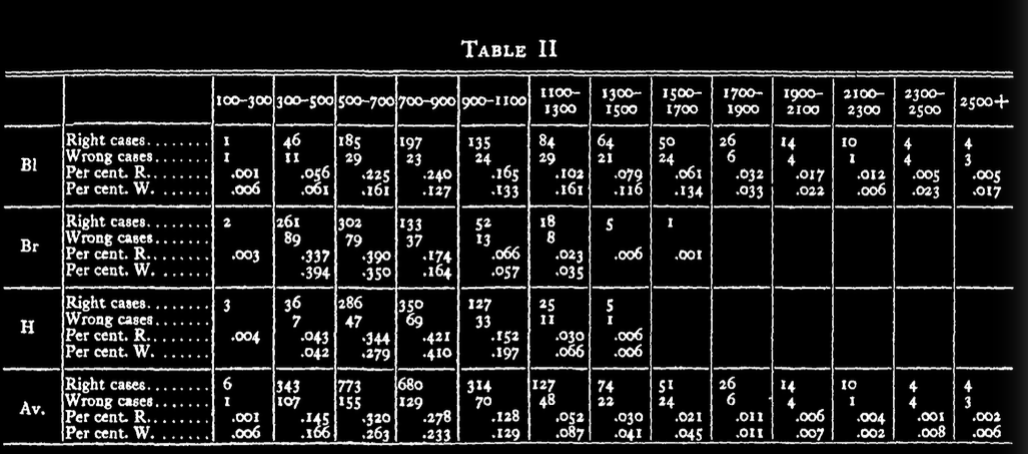
Henmon (1911, table 2)

speed vs accuracy:
Here you see the results of an old experiment by Henmon who had subjects judge which of two only very slightly different lines was longer. He noted that ‘under each category of judgment the wrong judgments are in general shorter’.
insert-transcript#3e87a46f-834f-4c67-9243-be7bce83c295-here
They were led to a conjecture about the computational description by reflection on the fact that \textbf{any broadly inferrential process must make a trade-off between speed and accuracy}.

To extrapolate objects’ motion on the basis of [e.g. Newtonian] physical principles, one should have assessed and evaluated the presence and magnitude of such imperceptible forces as friction and air resistance ... This would require a time-consuming analysis that is not always possible.

‘In order to have a survival advantage, the process of extrapolation should be fast and effortless, without much conscious deliberation.

Impetus theory allows us to extrapolate objects’ motion quickly and without large demands on attentional resources.’

Kozhevnikov and Heggarty (2001, p. 450)

insert-transcript#1b600260-f8d9-4be3-94d2-f69fd0052941-here

ethics?

insert-transcript#a1b8c68e-608f-4163-8da4-8f391081e382-here

If we applied Thomson’s method (or Rawls’) in the case in attempting to discover things about the physical world, we would unable to do things like landing a robot on a comet.

If we applied Thomson’s method (or Rawls’) in the case in attempting to discover things about ethical principles, we would unable to deal with unfamiliar problems.

You can imagine things involving AI or body transplants.

This is because whether something seems obvious (even after much reflection---see Aristotle) depends on fast processes. And fast processes gain speed by sacrificing accuracy.

insert-transcript#22e3e93f-8284-4ec4-9941-e41aa5696522-here
So now I want to say: you have the sense that you know but really you do not. Just like people used to be super convinced about how vertical motion would go.

Thomson’s method

[premise] There is a morally relevant difference between David and Edward.

[premise] There is no morally relevant difference between Edward and Frank.

[premise] ...

[conclusion] Thomson’s principle better explains the moral facts than Foot’s principle.

(how) do I know?