Please be cautious in using the transcripts.
They were created mechanically and have mostly not been checked or revised.
Here is how they were created:
This is an error-prone process.
Click here and press the right key for the next slide.
(This may not work on mobile or ipad. You can try using chrome or firefox, but even that may fail. Sorry.)
also ...
Press the left key to go backwards (or swipe right)
Press n to toggle whether notes are shown (or add '?notes' to the url before the #)
Press m or double tap to slide thumbnails (menu)
Press ? at any time to show the keyboard shortcuts
1. Ethical judgements are explained by a dual-process theory, which distinguishes faster from slower processes.
2. Faster processes are unreliable in unfamiliar* situations.
3. Therefore, we should not rely on faster process in unfamiliar* situations.
4. When philosophers rely on not-justified-inferentially premises, they are relying on faster processes.
5. The moral scenarios and principles philosophers consider involve unfamiliar* situations.
6. Therefore, not-justified-inferentially premises about particular moral scenarios, and debatable principles, cannot be used in ethical arguments where the aim is knowledge.
‘it would be a cognitive miracle if we had reliably good moral instincts [intuitions] about unfamiliar* moral problems’
Greene, 2014 p. 715
unfamiliar* problems = ‘ones with which we have inadequate evolutionary, cultural, or personal experience’
why?
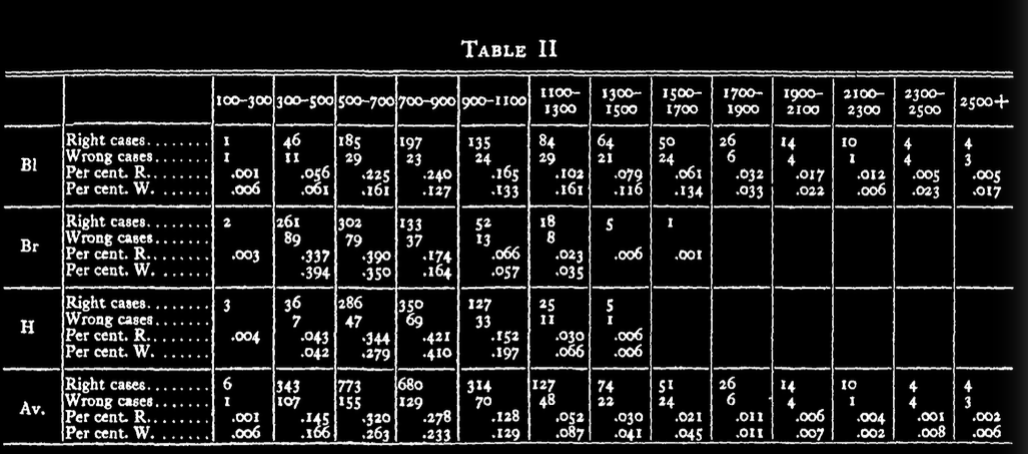
speed–accuracy trade-offs

Henmon (1911, table 2)


‘it would be a cognitive miracle if we had reliably good moral instincts [intuitions] about unfamiliar* moral problems’
Greene, 2014 p. 715
why?
an objection
Compare the physical case.
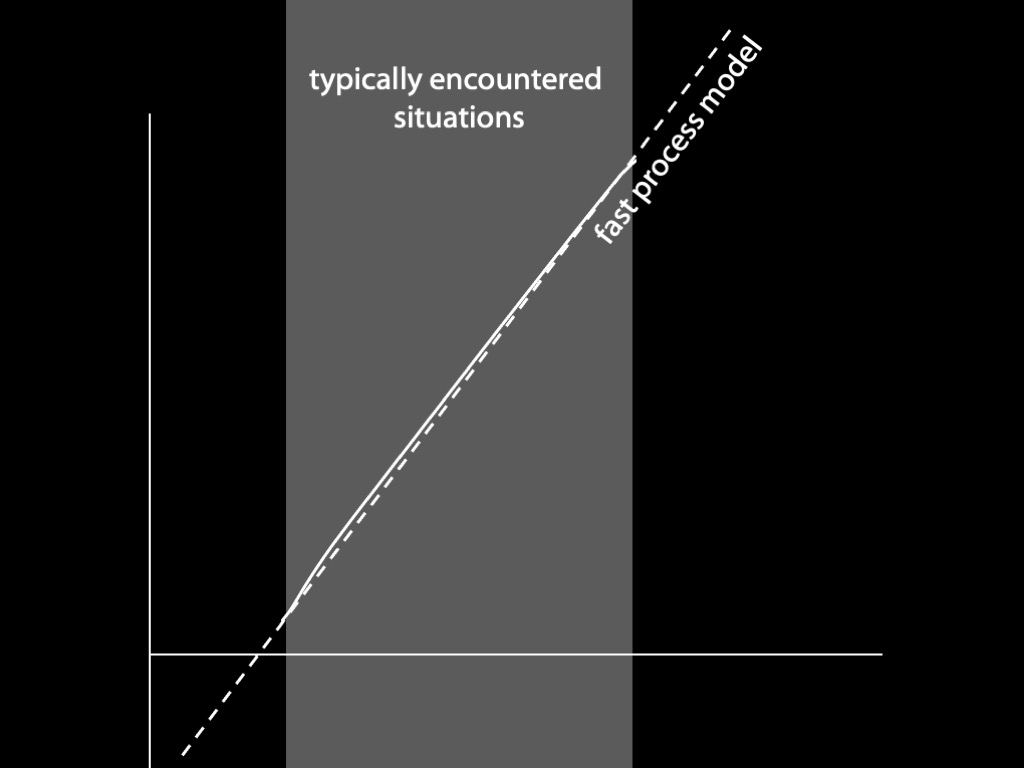
Fast processes are characterised by principles
which yield correct predictions in some unfamiliar* cases, including
point-light displays, and
cartoons
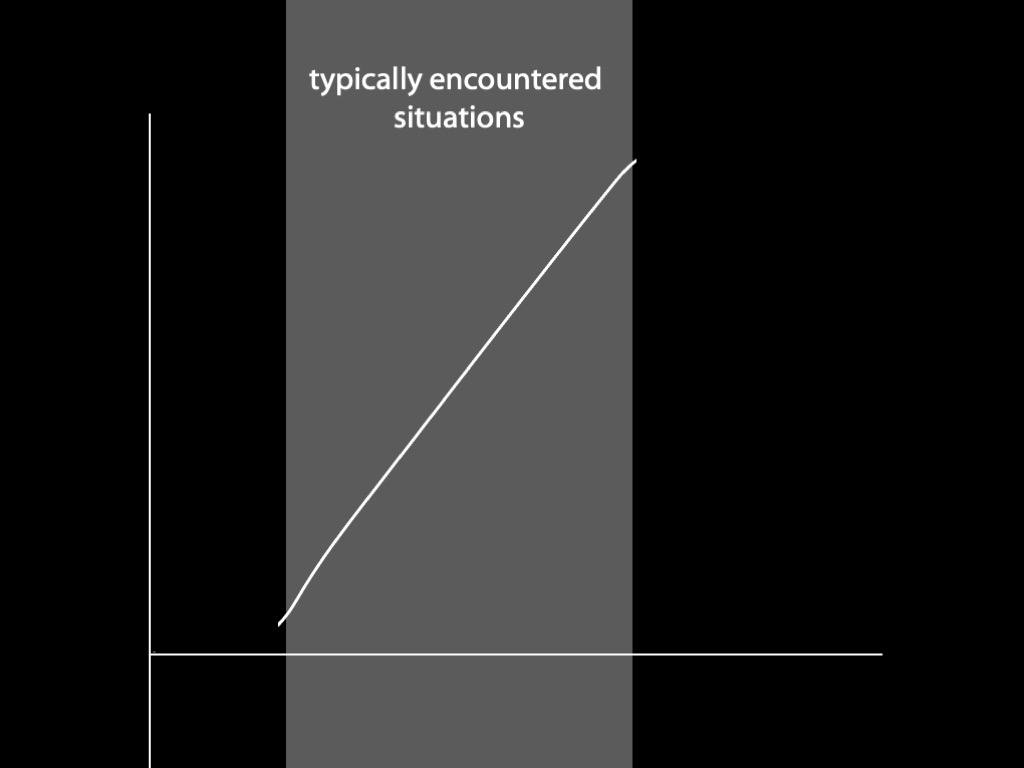
unfamiliar problems (or situations): ‘ones with which we have inadequate evolutionary, cultural, or personal experience’
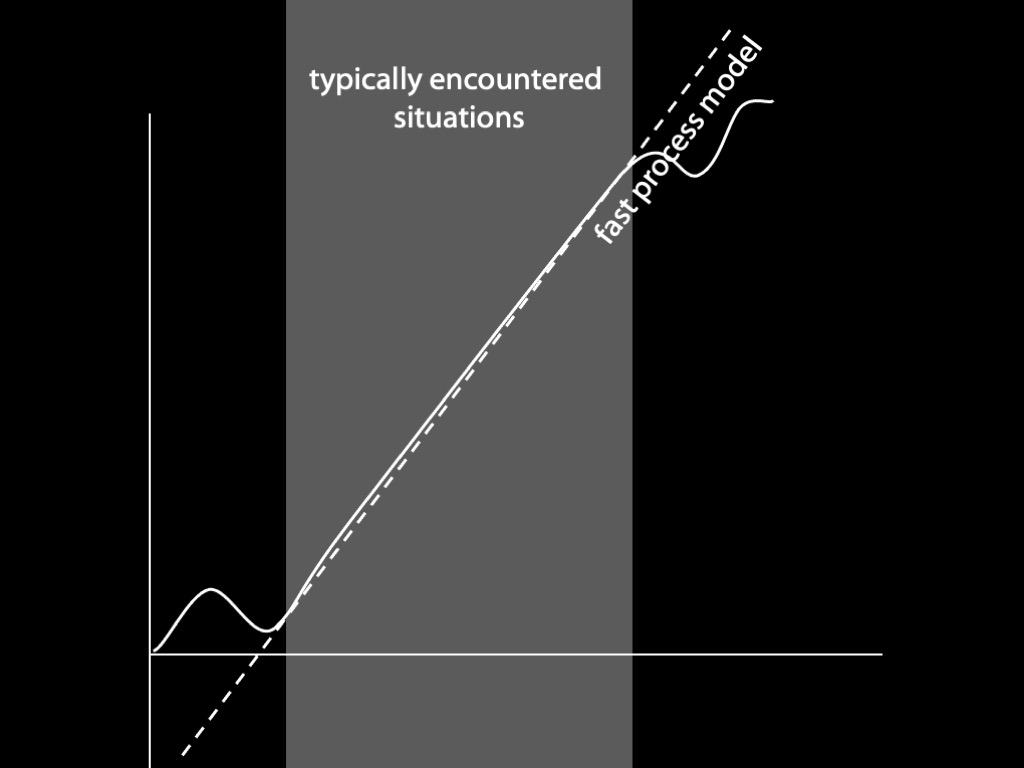
‘it would be a cognitive miracle if we had reliably good moral instincts about unfamiliar* moral problems’
not a cognitive miracle
Fast processes are reliable in one particular kind of unfamiliar* case
a cognitive miracle
Fast processes are reliable in all kinds of unfamiliar* cases
1. Ethical judgements are explained by a dual-process theory, which distinguishes faster from slower processes.
2. Faster processes are unreliable in unfamiliar* situations.
3. Therefore, we should not rely on faster process in unfamiliar* situations.
4. When philosophers rely on not-justified-inferentially premises, they are relying on faster processes.
5. The moral scenarios and principles philosophers consider involve unfamiliar* situations.
6. Therefore, not-justified-inferentially premises about particular moral scenarios, and debatable principles, cannot be used in ethical arguments where the aim is knowledge.