
insert-transcript#bb670055-cb5c-4def-a278-833f54c88c57-here
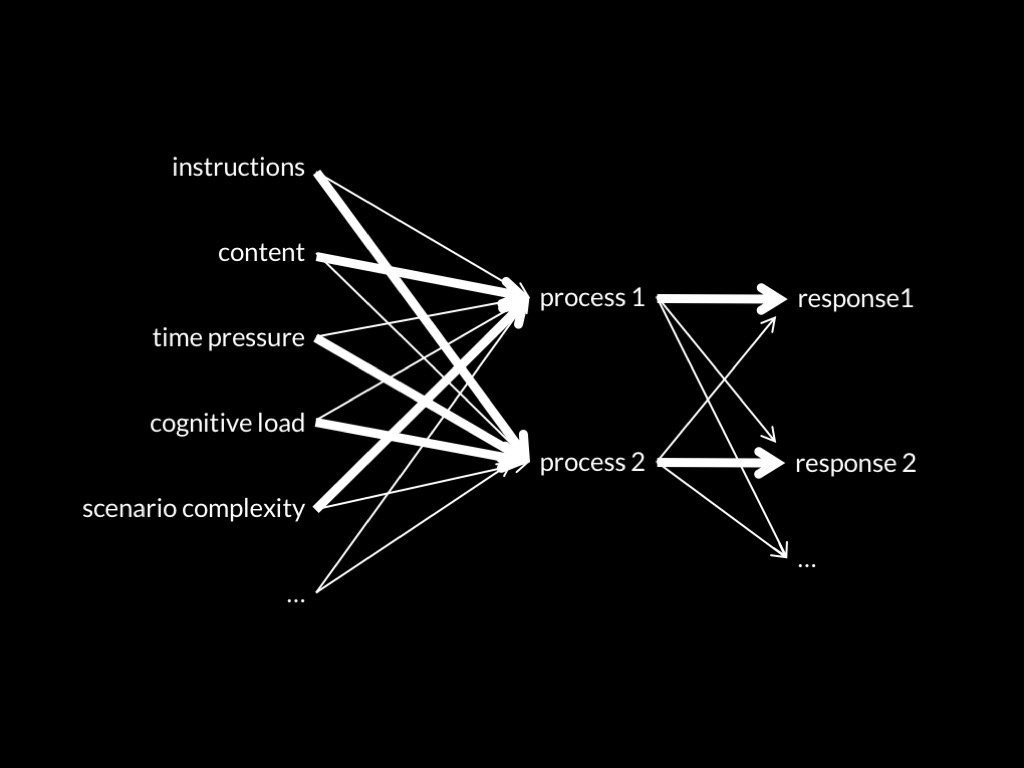
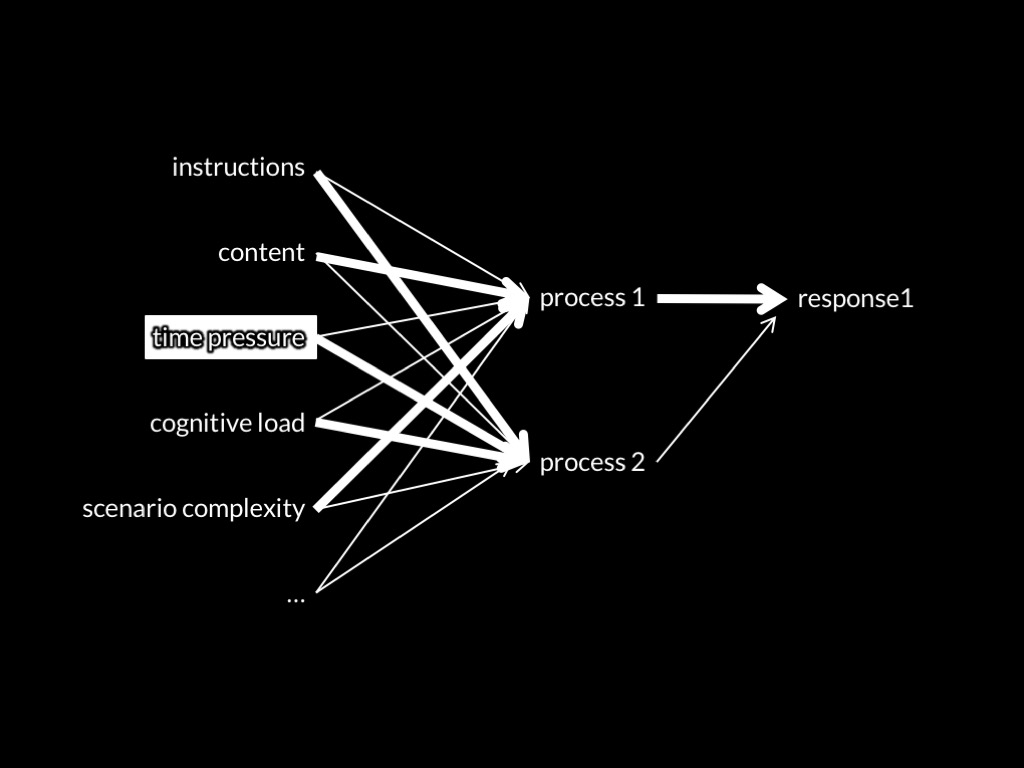
Start with a simple causal model.
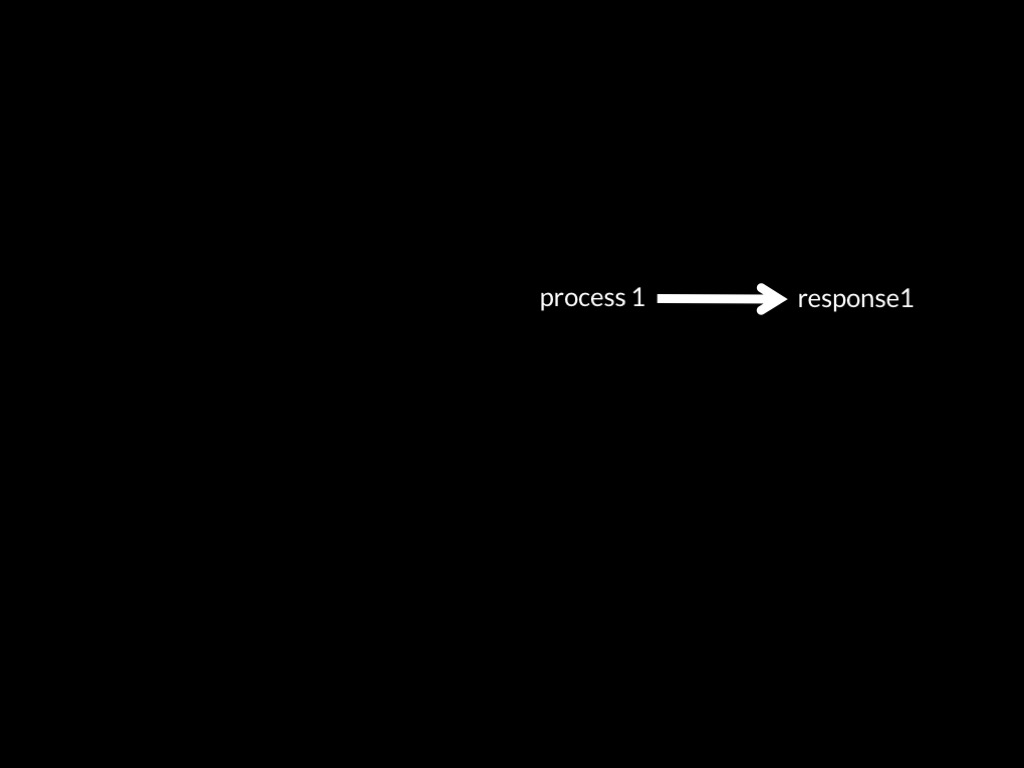
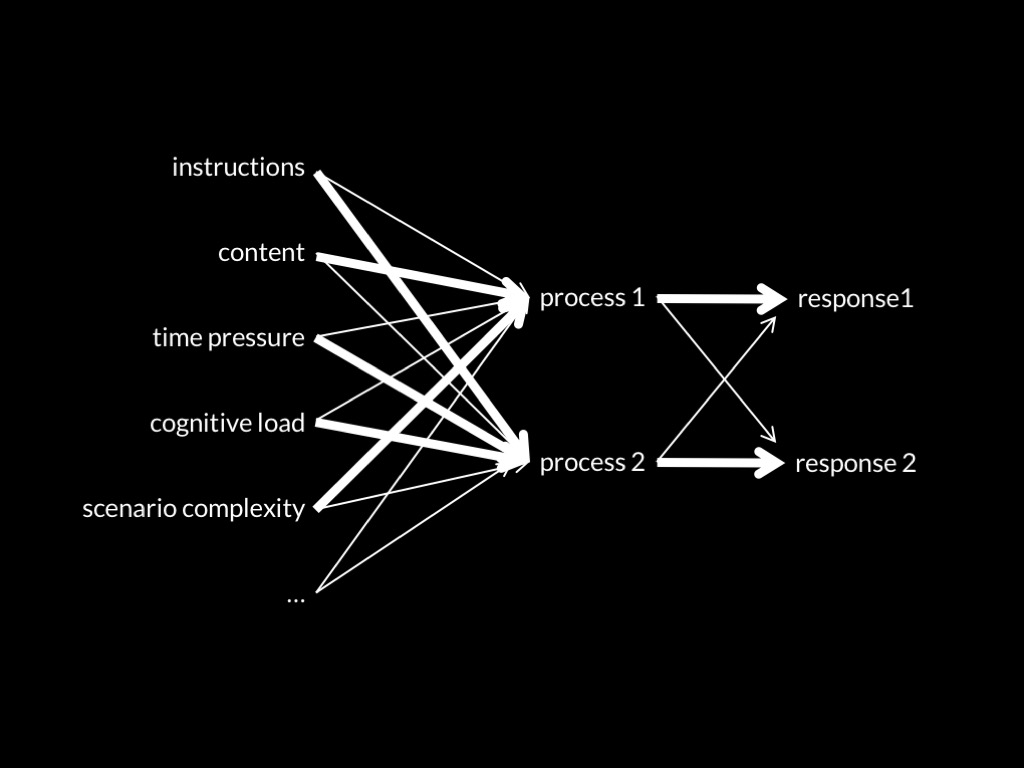
‘response 1’ is a variable representing which response the subject will give.
[Which values it takes will depend on what sort of response it is (e.g. a verbal
response, proactive gaze, button press.)
We can think of it as taking three values, one for correct belief tracking,
one for fact tracking, and one for any other response.]
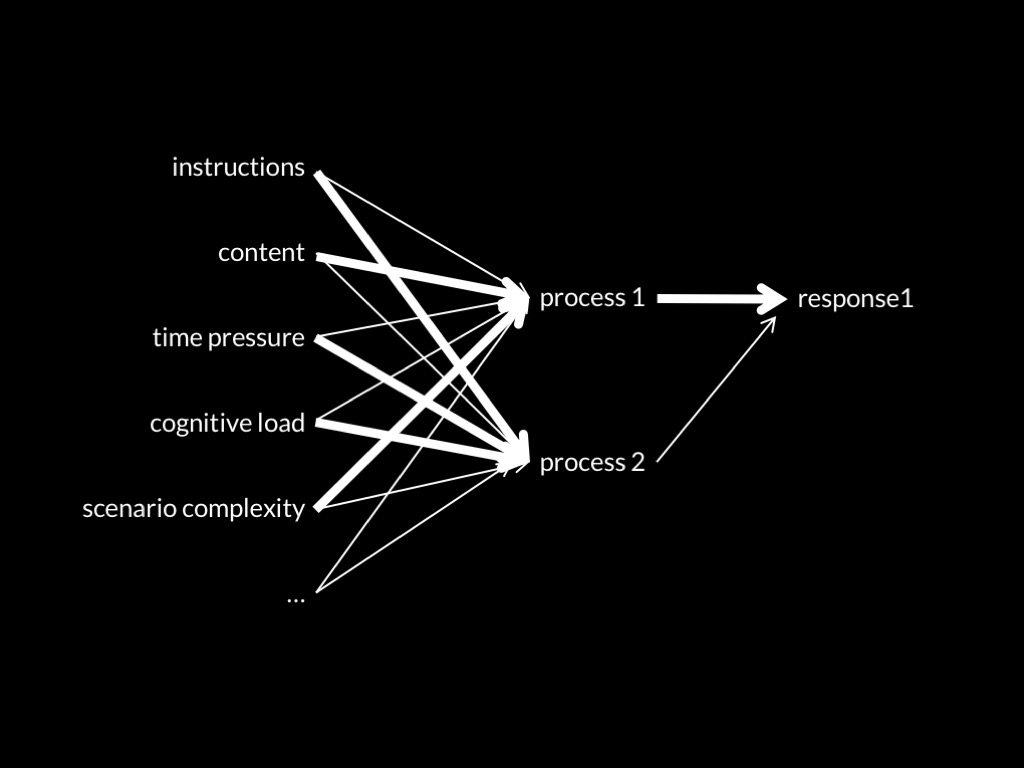
‘process 1’ and ‘process 2’ are variables which each represent whether a certain
kind of ethical process will occur and, if so, what it’s outcome is.
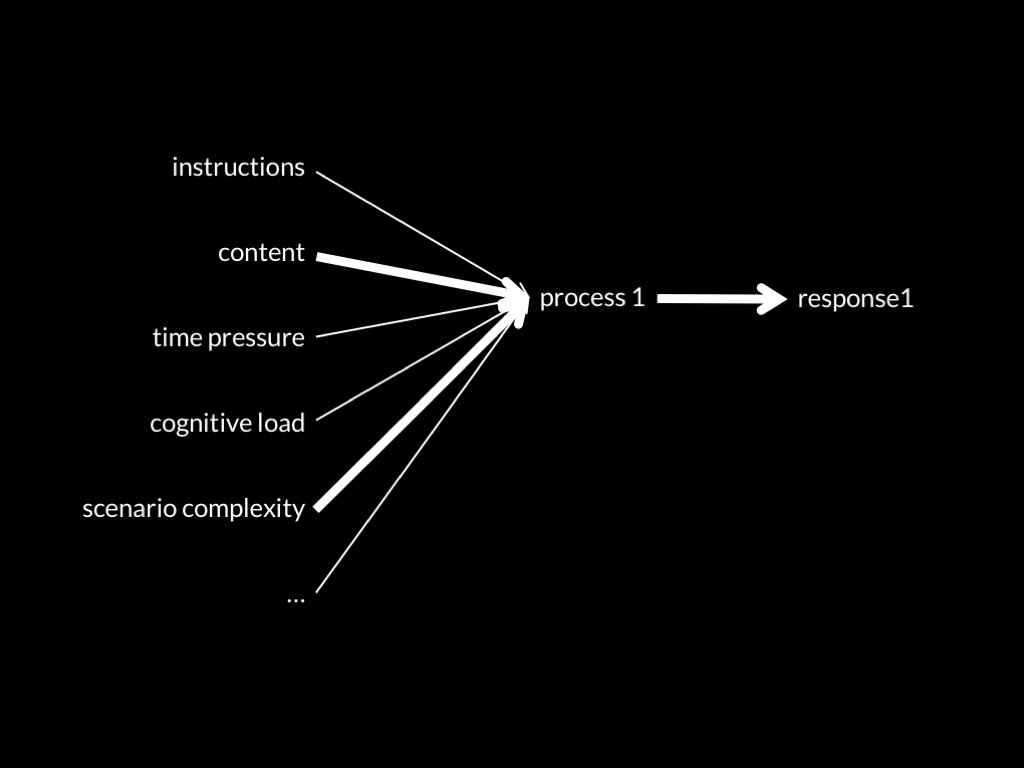
And the arrows show that the probability that response 1 will have a certain value is
influenced by the value of the variables process 1 and process 2 (and by other things
not included in the model).
So it should be possible to intervene on the value of ‘process 1’ in order to
bring about a change in the value of ‘response 1’.
[I’ve used thicker and thinner arrows informally to indicate stronger
and weaker dependence. Strictly speaking the width has no meaning and this model
doesn’t specify exactly how the values of variables are related, only that they are.]
insert-transcript#ab240762-20cf-4f23-9419-0082e1486bdc-here
insert-transcript#fbd0005e-6e5c-4a9d-8278-a8d49f35d540-here
insert-transcript#5e970015-f847-4102-b168-8a35a9bbfd5d-here
insert-transcript#0a1a8c69-e22c-4ecf-b18e-92d5763ac53e-here
insert-transcript#b3c93157-2f3f-464d-aad2-31a4e8e215f1-here
insert-transcript#cffdfbd0-ad97-4ef3-af2b-175682c2540a-here
insert-transcript#2bb21c1d-b95c-44ed-89df-ba0f3fee72b1-here
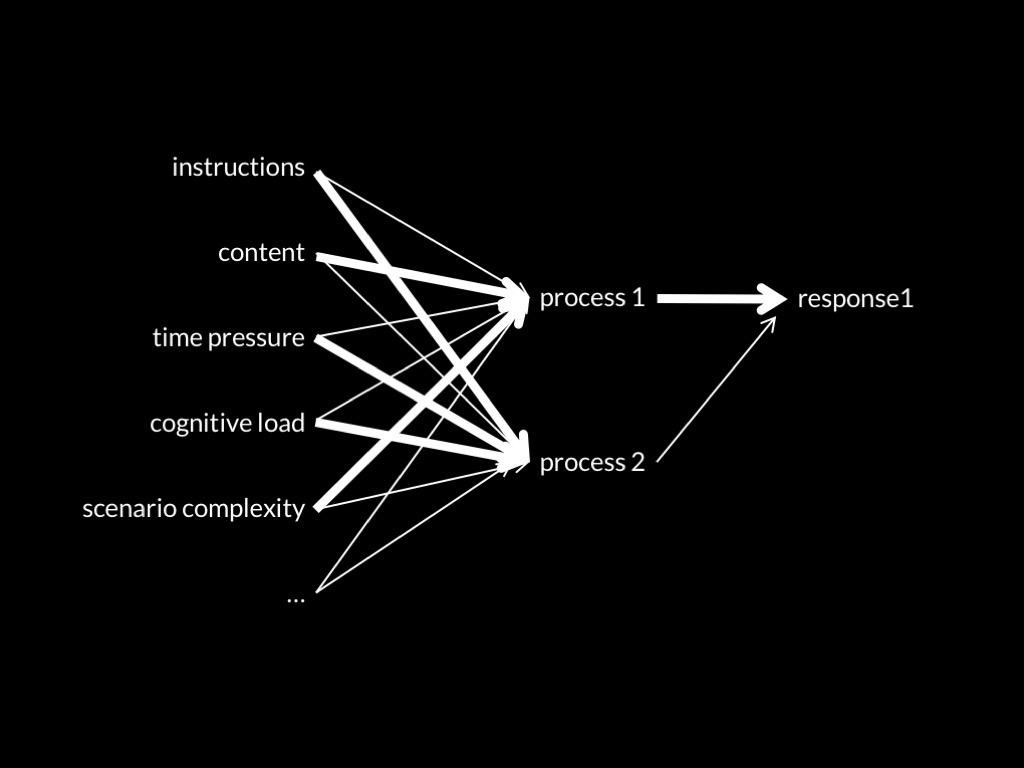
Actually we don’t need to consider more than one response for the
present since there is no evidence concerning multiple types of response (alas!).
insert-transcript#4ba71675-a2ed-4466-8c92-2913bec9cd98-here
insert-transcript#1efa8a93-9b8f-41e0-ab1a-be70a9a67e03-here
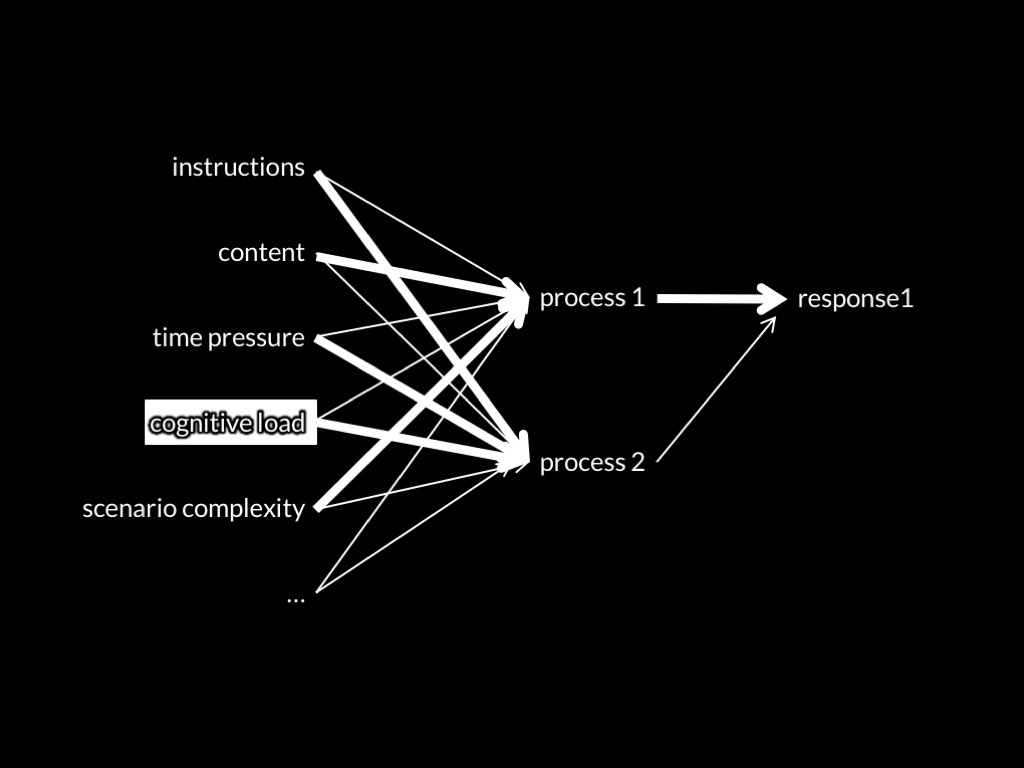
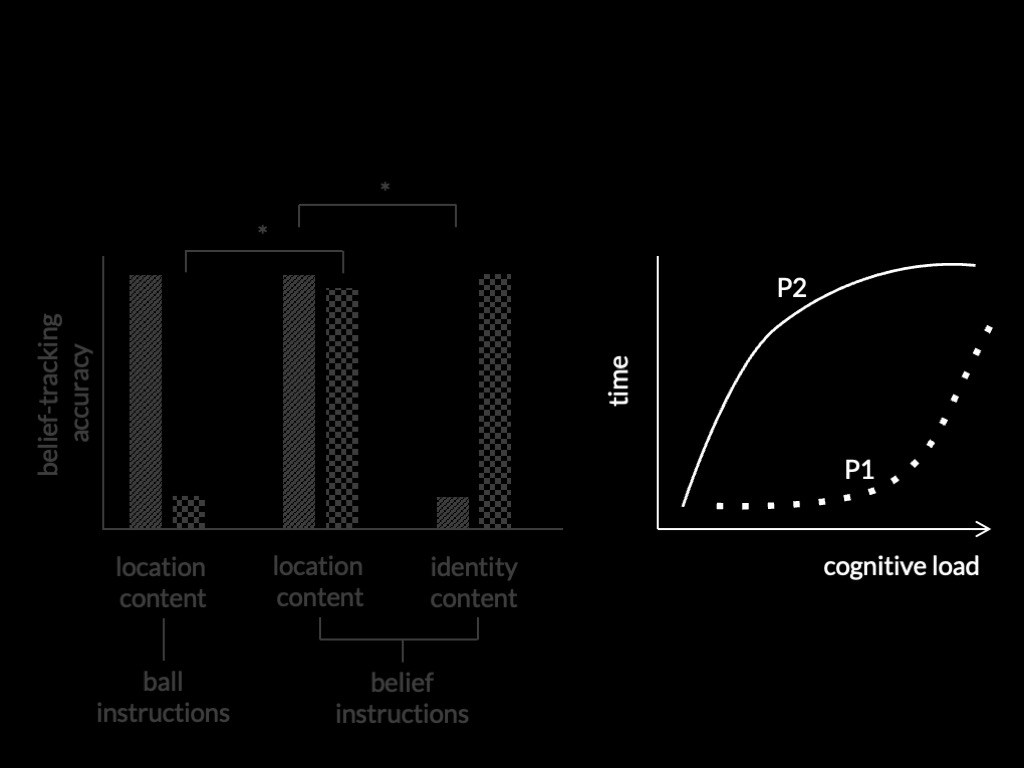
Further, the probability that responses of these two types track beliefs should be
differently affected by factors such as time pressure and cognitive load. (It isn’t
important that either is entirely unaffected; what matters is just that the effects are
different.)
As far as I know we don’t yet have direct evidence for this, because few studies
have compared what happens to two response types as factors like time pressure
or cognitive load are varies.
There is, of course, some evidence that responses of some types are less susceptible
to cognitive load than others (e.g. Qureshi, Apperly, & Samson (2010) on L1 VPT).
insert-transcript#5c6f8be0-6c29-4d28-b632-57fae1ce55a9-here
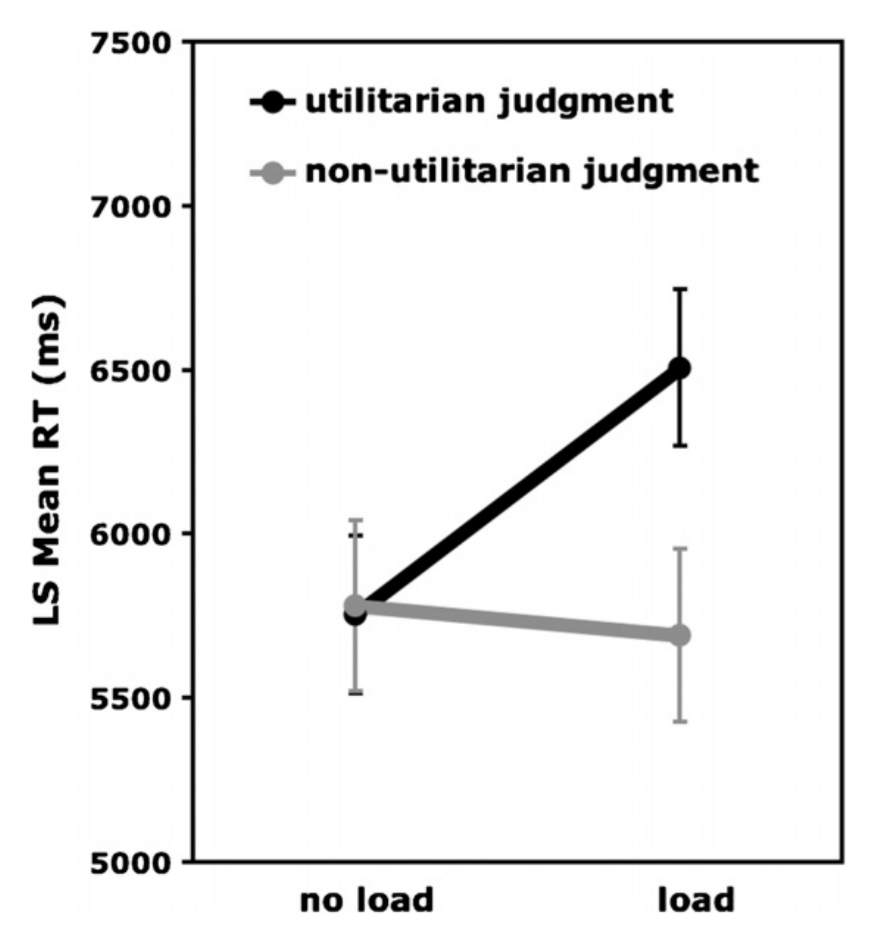
Greene et al 2008, figure 1
This experiment uses the terrorist (killing one person to save five) dilemma
from (Koenigs et al., 2007)
that they were asked to think about earlier.
insert-transcript#42522d20-7acd-4dd6-8e6d-916685f989cf-here
insert-transcript#b9736cbd-e23e-4193-bc3b-9d2a64c59ed8-here
insert-transcript#cb4e7a8d-a94e-4e00-a7c7-261840af9a56-here
time pressure study
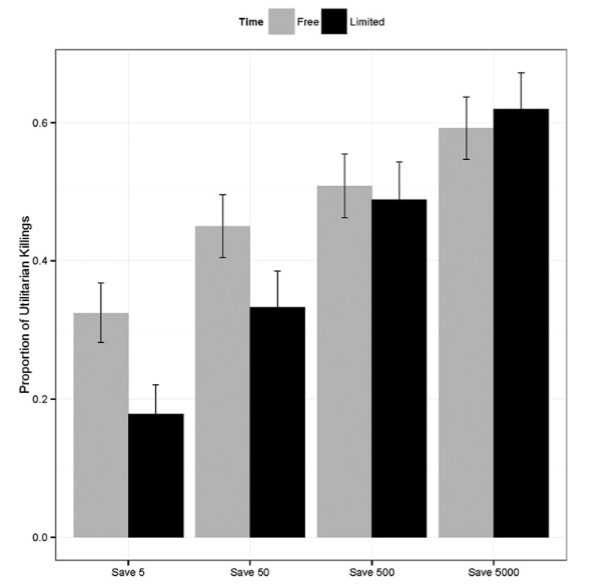
Trémolière and Bonnefon, 2014 figure 4
insert-transcript#fbd4f304-d551-44cf-a63a-4c7f015911e0-here
Prediction: Limiting the time available to make a decision will reduce consequentialist responses.
insert-transcript#c273fe31-b742-405d-bf42-52853a93cbf4-here
So this is our dual process theory of ethical abilities.

insert-transcript#4e2cfd75-7d07-4296-84d1-1d2ffa728dfc-here
[Aside : camera analogy]
‘it’s worth highlighting three ways in which the camera analogy may mislead’
(Greene, 2014, p. 698)
Greene, 2014 p. 698
I.e. this is a misleading analogy for a dual process theory
(and entirely unhelpful, I think).